
 The cashew nut that you enjoy as a healthy snack or a culinary ingredient has undertaken an extraordinary journey. It’s a path of transformation, from a delicate blossom to a tough-shelled treasure, requiring careful hands and intricate knowledge at every stage. At PCCNI, we are stewards of this entire process. Let us guide you through the remarkable journey of the cashew nut, from flower to kernel.
Stage 1: The Blossoming of Potential
Our journey begins not with a nut, but with a flower. The cashew tree (Anacardium occidentale) bursts into a spectacular display of panicles—clusters of tiny, fragrant flowers ranging in colour from pale yellow to pinkish-red. These blossoms, buzzing with pollinators, are the first promise of the harvest to come.
Flowering typically occurs in the dry season, and after successful pollination, a small, bean-shaped structure begins to form at the base of the flower. This is the true fruit, the cashew nut. But in a unique botanical twist, the story doesn’t end there.
Stage 2: The Deceptive Fruit and the Growing Nut
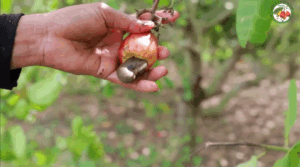
As the tiny nut develops, a miraculous transformation happens to the stem just above it. This stem, called the peduncle, begins to swell, becoming juicy, fragrant, and brightly coloured in yellows and reds. This is the “cashew apple,” a false fruit that is both delicious and highly perishable.
While the cashew apple attracts animals (and humans!) with its sweet-tart flavour and is rich in Vitamin C, its true purpose is to protect and nourish the developing nut that hangs from its bottom. For several weeks, the apple and the nut grow together, with the nut’s shell hardening gradually under the tropical sun.
Stage 3: The Delicate Harvest
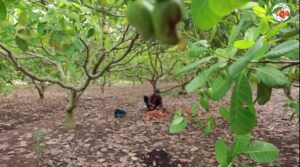
Harvest time is a period of intense activity and care in our orchards in Bombali District. Unlike many tree nuts that are shaken loose, cashews must be harvested by hand. When the cashew apple ripens to a bright yellow or red and feels soft to the touch, it is gently plucked from the tree branch, with the nut still attached.
This labour-intensive method ensures the nut is not damaged and allows for the cashew apple to be used, reducing waste. It’s a testament to the skill and dedication of our farmers, who know precisely when each fruit is ready for picking.
Stage 4: The Critical Separation
Once harvested, the first crucial step is to separate the nut from the apple. The cashew apple, with its incredibly short shelf life of about 24 hours, is often eaten fresh, juiced, or made into jams and preserves—a tasty, nutritious bonus from the harvest.
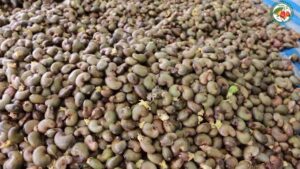
The raw nuts, however, are our primary focus. They are collected and spread out in a thin layer to sun-dry. This is a vital stage. Drying reduces the moisture content in the shell, making it easier to crack later on. It also causes the toxic, caustic oil (cashew nut shell liquid – CNSL) trapped within the shell to partially drain away, a necessary step for safe processing.
Stage 5: The Art and Science of Shelling
This is the most challenging and dangerous step in the entire process. The cashew’s hard, leathery shell is lined with a phenolic resin containing CNSL, a substance that can cause severe skin irritation similar to poison ivy.
Traditionally, this was done by hand using a mallet, a process that was risky and required immense skill. At PCCNI, we are moving towards safer, more efficient mechanical methods to protect our workers. The goal is to carefully crack the shell without bruising the delicate kernel inside. This is a precise operation—too much force and the valuable kernel is destroyed; too little, and the shell remains unopened.
After shelling, the kernels are meticulously graded by size and quality (whole, broken, pieces) before moving to the final step.
Stage 6: The Final Touch: Peeling and Drying
The shelled cashew kernel is still covered by a thin, papery skin, known as the testa. This skin is removed by gentle heating or roasting, which loosens it, allowing it to be rubbed or blown off. This reveals the familiar, creamy-white cashew nut we recognise.
Finally, the kernels undergo one last round of careful drying to ensure they are stable for storage and transport. They are then vacuum-sealed in packaging to protect their freshness, flavour, and nutritional value, ready to make the journey from our community in Sierra Leone to your kitchen.
A Journey of Community and Care
The journey of the cashew nut is a story of nature’s ingenuity and human dedication. It is a process that cannot be rushed or fully automated without sacrificing quality. At PCCNI, every step—from the flowering of the tree to the careful packaging of the kernels—is infused with the care of our farmers. When you choose PCCNI cashews, you are not just buying a nut; you are appreciating the result of a long, intricate, and fascinating journey of transformation.
Experience the quality that this careful journey creates. Explore our selection of premium, sustainably grown cashew nuts today.